AI BDC vs In-House BDC: Cost & ROI Compared (2026)
Compare AI vs in-house BDC costs with real data: 24/7 coverage, appointment value, and ROI math that works for dealerships in 2026.
Most dealerships compare an AI BDC to a traditional in-house BDC by stacking one line item against another: software fee versus payroll. That comparison is almost guaranteed to lead you to the wrong conclusion.
The actual question isn’t “what does each option cost?” It’s three questions stacked on top of each other:
- What does it cost to reliably answer and resolve customer demand every time it arrives, including nights, weekends, and peak spikes?
- How much money are you losing right now when calls go to hold, voicemail, or just ring out?
- What is each recovered appointment actually worth in gross profit?
When you model all three layers, the math shifts dramatically. And usually not in favor of the status quo.
At Flai, we work with dealerships every day to solve this exact problem with AI-powered voice, SMS, and email agents. This guide isn’t a pitch, though. It’s the cost framework we wish every dealer had before making this decision, built on real wage data, industry benchmarks, and case study results you can verify. Plug your own numbers in at the end, and the answer will speak for itself.
Why Phone Calls Still Matter for Dealership Revenue
Before we compare anything, it’s worth grounding in why this decision matters so much.
NADA’s 2024 annual financial profile shows the average new-vehicle dealership did $9,226,717 in service and parts sales, writing 15,924 repair orders. That works out to about $466 in service and parts sales per customer repair order.
Service isn’t a side business. For most stores, it’s the most consistent, highest-margin revenue line they have. And nearly all of it starts with a phone call: a customer calling to schedule an oil change, check on a recall, or ask about warranty coverage.
Now here’s where the problem shows up. A Car Wars analysis of nearly 3,000 dealerships (reported by Car Dealership Guy) found that in 2024, the average hold time was 3 minutes and 5 seconds, and 31.8% of unconnected calls ended because customers hung up while on hold. Another 32.3% went to voicemail. The average connection rate across all dealerships sat at just 65.2%.
That means roughly 1 in 3 callers never connects with anyone who can help them. For a store fielding 1,000 calls a month, that’s 350 people who tried to give you their business and couldn’t.

Sit with that for a second. More than a third of people who call your store and can’t connect just leave. Research on customer hold behavior puts this in even sharper focus: 60% of callers hang up after just one minute on hold, and 32% won’t wait at all.
The top 20% of dealers achieve an 85% service call connection rate. Everyone else hovers around 65%. The gap between those two numbers represents a lot of booked appointments and a lot of revenue.
What Does an In-House BDC Cost in 2026?
When most dealers think about BDC costs, they think about wages. But wages are only the starting point. If you’re still getting up to speed on what an AI BDC actually is and how it automates dealership calls, it helps to understand what you’re comparing against first.
BDC Rep Salaries Right Now
Current salary benchmarks paint a clear picture:
- Indeed (updated Feb 2026): $17.89/hour average base for a BDC Representative
- ZipRecruiter (Feb 2026): $37,575/year national average
- Salary.com: median around $45,543 for Automotive BDC Representatives, reflecting the fact that this role often lands higher than generic call-center work, especially with incentives
A reasonable base-comp range to model: roughly $38K to $46K per rep, before employer burden.
How Much Does a BDC Rep Actually Cost After Benefits?
Raw salary doesn’t capture what a BDC seat actually costs your business. The Bureau of Labor Statistics Employer Costs report (June 2025) shows that for private industry, wages and salaries make up about 70.2% of total compensation. Benefits account for the remaining 29.8%.
That gives you a simple conversion:
Fully loaded comp = base wages / 0.702
So a rep earning $37,600/year costs roughly $53,500/year fully loaded. A rep at $45,500/year comes to about $64,900/year. And that still doesn’t include management overhead, recruiting costs, technology, or turnover.
How Many BDC Reps Do You Need for 24/7 Coverage?
This is the part that breaks traditional BDC economics. Twenty-four-seven coverage requires 168 hours per week. One full-time rep covers about 40 hours (before PTO, training, and breaks).
That means a single “always-answered” phone seat takes roughly 4.2 full-time equivalents.
| Scenario | Calculation | Annual Cost |
|---|---|---|
| Low-end estimate | $53,500 x 4.2 FTEs | $225,000/year |
| Higher-end estimate | $64,900 x 4.2 FTEs | $272,000/year |

And you still haven’t accounted for shift differentials, overtime premiums, a manager to run the operation, QA and coaching tools, the tech stack (CRM licenses, call tracking, texting platforms, dialers), or the reality that turnover in BDC roles is significant. Every time someone leaves, you’re back to recruiting, hiring, training, and waiting for the new rep to ramp.
This is exactly why most stores don’t actually run 24/7. They patch together daytime BDC, advisors picking up calls when they can, voicemail after hours, and maybe some overflow service. It sort of works. Until you look at how many calls are falling through the cracks.
What Should You Include in Your Full BDC Cost Model?
If you want to be thorough about modeling your real BDC costs, here’s every line item you should include:
People costs (annual):
- Rep wages (base + incentive)
- Employer burden (benefits + payroll taxes)
- BDC manager salary (fully loaded)
- Recruiting and training costs
- Turnover and ramp-up time (the productivity gap between when someone leaves and when their replacement is fully effective)
Systems costs (annual):
- CRM licenses
- Call tracking and recording tools
- Texting platform
- Dialer software (if running outbound)
- QA and coaching tools
Coverage inefficiency (annual):
This is the cost of paying for time that isn’t productive: demand spikes that force overstaffing on some days, off-peak periods that create idle time, and the hours lost to lunch, meetings, training days, and PTO. It’s the reason why hiring “one more rep” never quite fixes the coverage problem. You’re always either understaffed for peak times or overstaffed for slow ones.
Outsourced BDC: What It Costs and Where It Falls Short
Outsourcing sounds like a middle path: skip the headcount and management burden, pay someone else to answer the phones. There’s a reason dealerships are increasingly replacing outsourced call centers with AI, but the economics are worth walking through first.
Current outsourced contact center rates vary widely:
| Location Tier | Hourly Rate Range |
|---|---|
| US onshore | $20 to $35/hour |
| Latin America nearshore | $8 to $18/hour |
| Offshore (Philippines/India) | $6 to $15/hour |
Outsourcing research shows that developed markets (US, Canada, Australia, Western Europe) can run $25 to $65/hour depending on specialization.
If you want just after-hours and weekend coverage with real humans, the hours add up fast. Even 160 hours per month at $25/hour is $4,000/month for a single agent’s time, and that’s not dedicated training, not dealership-specific expertise, and not guaranteed scheduling ability.
Some auto-specific outsourcing vendors price under $1,000/month, but examine what’s actually included. The critical question is this: are they booking appointments, or are they taking messages?
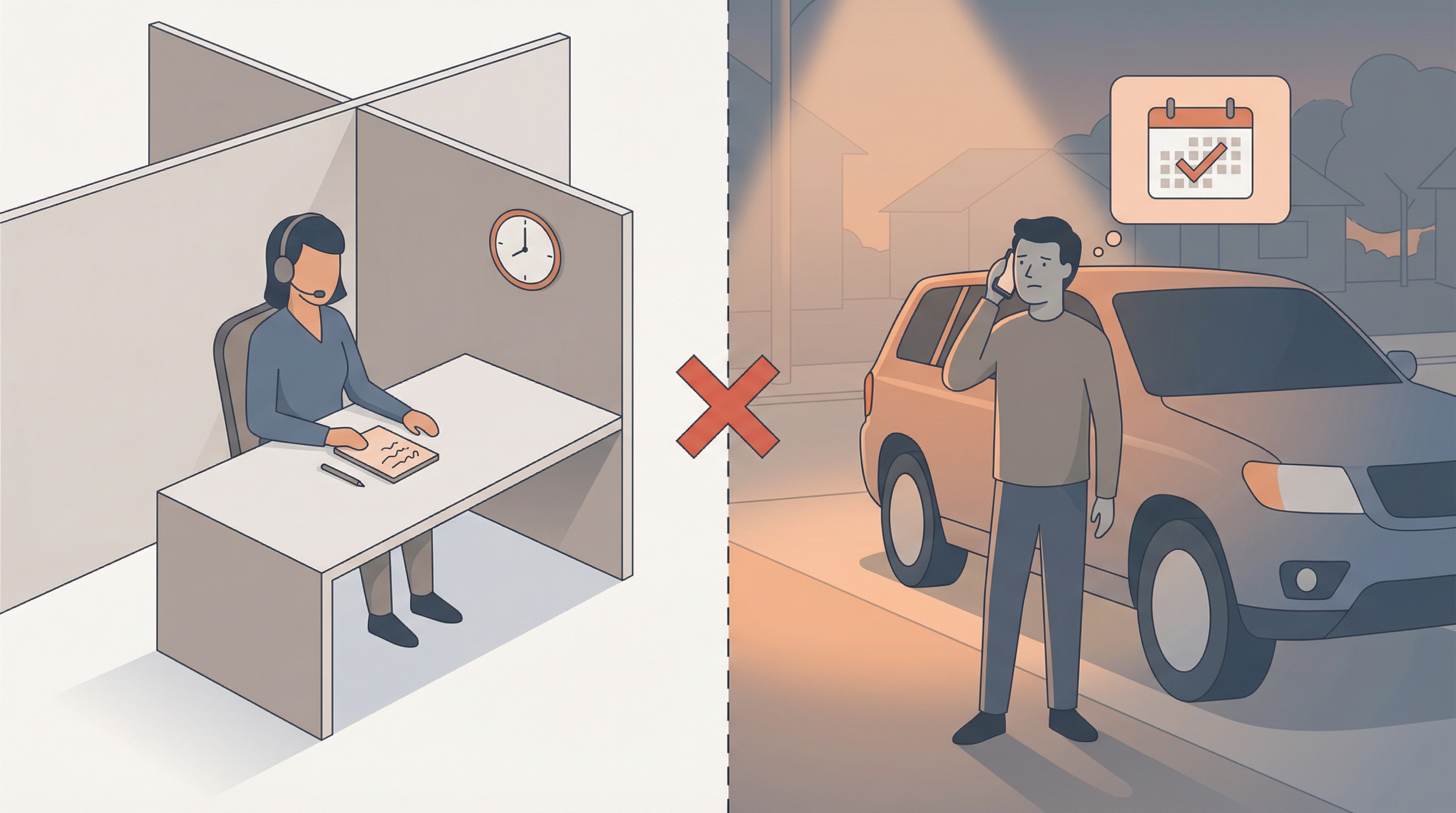
Message-taking is not resolution. A customer who calls at 8 PM wanting to book a 10,000-mile service doesn’t want someone to write down their name and promise a callback tomorrow. They want the appointment booked. If your outsourced provider can’t do that, you’re paying for a warm body between your customer and your competitor’s phone line.
There’s also a quality gap that’s hard to quantify but easy to feel. An outsourced agent working from a script doesn’t know your inventory, your service menu, your advisors’ schedules, or the quirks of your DMS. They can’t answer “Do you have a loaner available?” or “Can I get a ride back to my office?” because they don’t have access to those answers. The call gets flagged for follow-up, which means the customer waits, and a percentage of those customers don’t wait.
How AI BDC Costs Compare to Traditional Options
AI doesn’t make phone handling free. It changes the cost structure in three specific ways.
First, it removes the capacity ceiling. A human BDC rep handles one call at a time. Car Wars data shows the 10 AM to 12 PM window on Mondays is the highest call traffic period for most dealerships. If ten calls come in during that spike, you need ten reps or you’re putting people on hold. An AI BDC system handles concurrent calls without queuing, so your busiest hour gets the same answer rate as your quietest.
Second, it eliminates the coverage gap. An AI agent doesn’t need shifts, breaks, PTO, or overtime pay to cover nights and weekends. The cost of “being available at 11 PM” is the same as the cost of being available at 11 AM.
Third, it delivers consistency. Every call follows the same process: answer immediately, identify intent, check the scheduler, book the appointment, send confirmation. No bad days, no Monday morning fog, no “I forgot to ask for their email.”
To put some cross-industry context around this, ContactBabel’s 2025 US Contact Center Decision-Makers’ Guide reports that the average cost of an inbound call handled by humans is $7.16, with an average speed to answer of 99 seconds. In dealerships, that answer speed is often worse (remember the 3-minute-plus hold time from Car Wars).
An important nuance: AI BDC doesn’t necessarily mean fewer people. Gartner found that many customer service teams report stable staffing while handling higher volumes with AI. The real benefit is often capacity and efficiency. Your existing staff spends less time on repetitive scheduling calls and more time on high-value in-person interactions, complex service questions, and closing deals.
What Does AI BDC Actually Cost?
Be honest about these line items when modeling:
- Platform fee (often per rooftop, sometimes per department)
- Usage costs (calls, SMS messages, minutes, campaigns)
- Integration and onboarding (one-time setup)
- Ongoing QA (someone should review edge cases and refine workflows)
What Are the Risks of AI BDC?
Not everything about AI BDC is upside. Be clear-eyed about these:
- Wrong bookings or double-booking: this is why real-time scheduler integration matters, not just “we can take messages”
- Customer experience: evaluate actual voice quality and response speed, not just demo scripts
- Escalation handling: warm transfer with context is very different from a blind handoff
- Compliance: call recording consent, TCPA rules for outbound, SMS opt-outs
A serious vendor will show you how they handle each of these and give you logs and reporting to prove it.
How Much Is Each Appointment Worth? (The ROI Math)
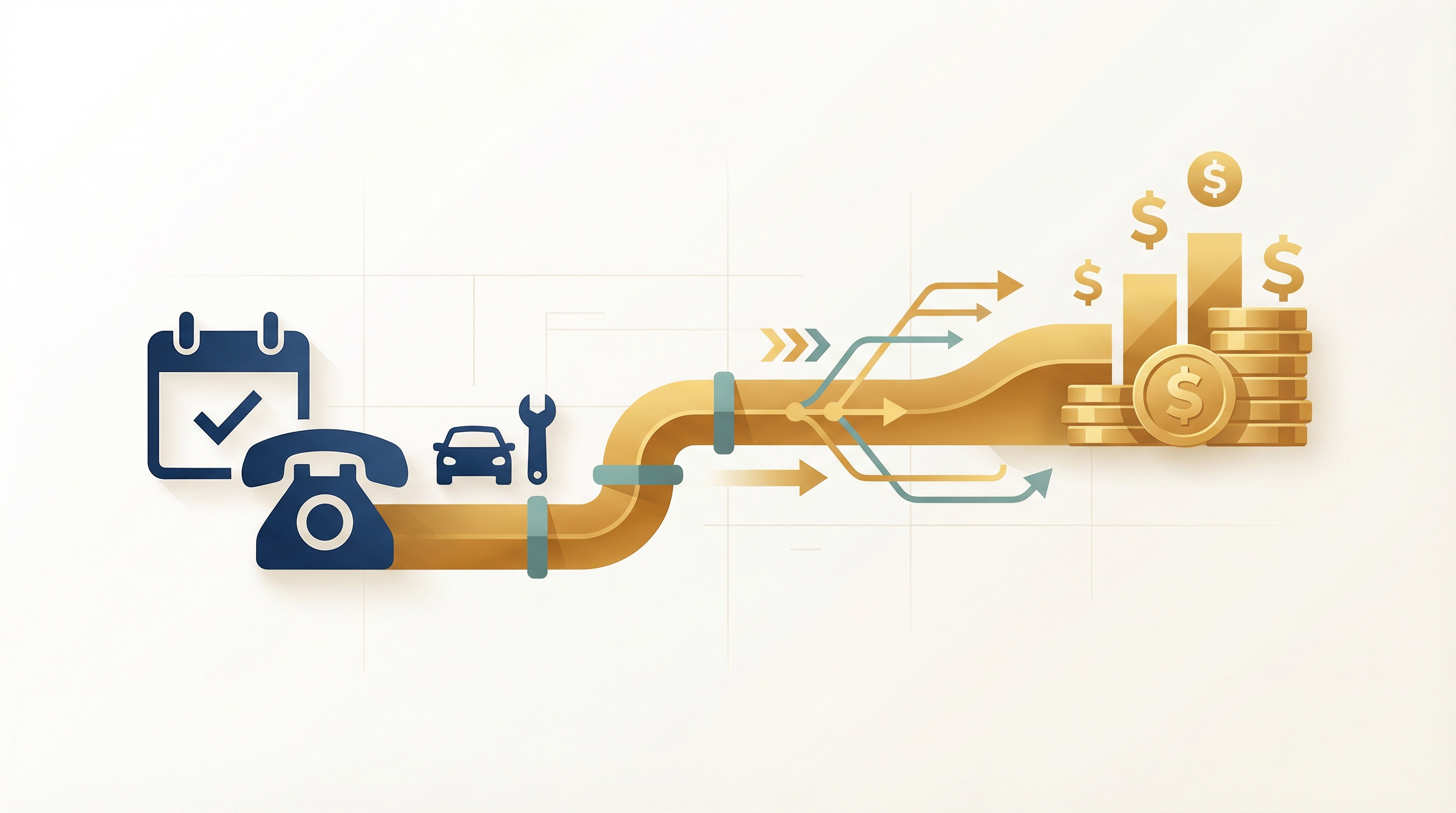
You can debate technology and staffing models all day. The cleanest way to cut through the noise is to translate everything into one number: what is each incremental appointment worth in gross profit?
What Industry Data Shows About Service Profit
Start with NADA’s per-customer repair order sales: $466 in 2024. Then apply a realistic service department margin. McKinsey’s analysis of public dealer group financials puts service department margins in the 45% to 55% range.
That gives you a gross profit contribution per appointment of roughly:
- $466 x 45% = $210
- $466 x 55% = $256
How Real Case Studies Compare to Industry Benchmarks
Flai’s Freeman Lexus case study reports 376 appointments booked with an estimated $100,000 profit impact, which works out to about $266 per appointment. That lines up closely with the NADA and McKinsey math, which is a solid sanity check.
Your anchor for this whole analysis: a single incremental service appointment is typically worth a few hundred dollars in gross profit. Even at the conservative end ($210), recovering just a handful of lost appointments per week adds up to serious money.
Simple ROI Calculator You Can Use Today
You don’t need perfect data to make this decision. You need directionally correct inputs.
What Numbers Do You Need from Your Systems?
- Total inbound calls per month (service + sales)
- Missed or abandoned rate (hold hang-ups + voicemails + after-hours misses)
- Bookable rate: what percentage of calls actually want an appointment
- Recovery rate: if answered properly, what percentage of bookable calls convert to booked
- Profit per appointment (use the $210-$256 range from NADA data, or your own)
How to Calculate Incremental Profit
Incremental appointments/month = Calls x Missed rate x Bookable rate x Recovery rate
Incremental profit/month = Incremental appointments x Profit per appointment
Real Example with Actual Numbers
Assume:
- 1,000 calls per month
- 30% missed or abandoned
- 35% of those are bookable
- 80% recovery rate when answered properly
- $266 profit per appointment (based on the Flai Freeman Lexus case)
Incremental appointments = 1,000 x 0.30 x 0.35 x 0.80 = 84 appointments/month
Incremental profit = 84 x $266 = $22,344/month
Even if you cut that in half to be conservative, you’re still looking at five figures per month in recovered gross profit.

How Many Appointments to Break Even?
Using $266 per appointment:
| Monthly Solution Cost | Break-Even Appointments |
|---|---|
| $2,000/month | ~8 appointments |
| $5,000/month | ~19 appointments |
| $10,000/month | ~38 appointments |
When your missed-call volume is meaningful, the AI vs traditional BDC cost comparison rarely comes out as a close call.
Why After-Hours Is the Biggest Revenue Opportunity
If there’s a single area where traditional BDC economics simply can’t compete, it’s after-hours.
According to Flai’s Y Combinator profile, 56% to 60% of dealership leads arrive after business hours. And about 70% of callers who hit voicemail contact a competitor within 30 minutes. Their estimate puts the total cost of missing after-hours calls at roughly $1 million annually for the average store.
These are vendor-stated figures, not an audited industry census. But the directional truth is hard to argue with: if your phone is a dead zone from 7 PM to 9 AM, you’re gifting business to whoever answers.
Here’s a quick validation exercise you can run in one week:
-> Pull your inbound call logs for 7 days
-> Bucket calls by hour
-> Count how many came in when you were understaffed or closed
-> Identify how many had scheduling intent (service appointment, test drive, recall)
You’ll know quickly whether after-hours is a rounding error or a profit leak. In our experience, most dealers are surprised by how much demand exists outside staffed hours. Research shows that 63% of consumers actually prefer a callback over staying on hold, which means even offering an immediate response and callback option after hours is better than silence.
How Flai Solves the AI BDC Challenge
We built Flai specifically to solve this problem. Not as a generic chatbot wrapped in a dealership skin, but as a purpose-built AI communications platform designed from the ground up for how car dealerships actually work.

What Makes Us Different
We built our own voice AI from scratch. Most competitors stitch together off-the-shelf voice components and call it done. We built our own voice infrastructure to keep conversations fast and natural, with fewer awkward pauses and fewer moments where the AI talks over the customer. That’s why calls through Flai sound like a real conversation, not a robot reading a script.
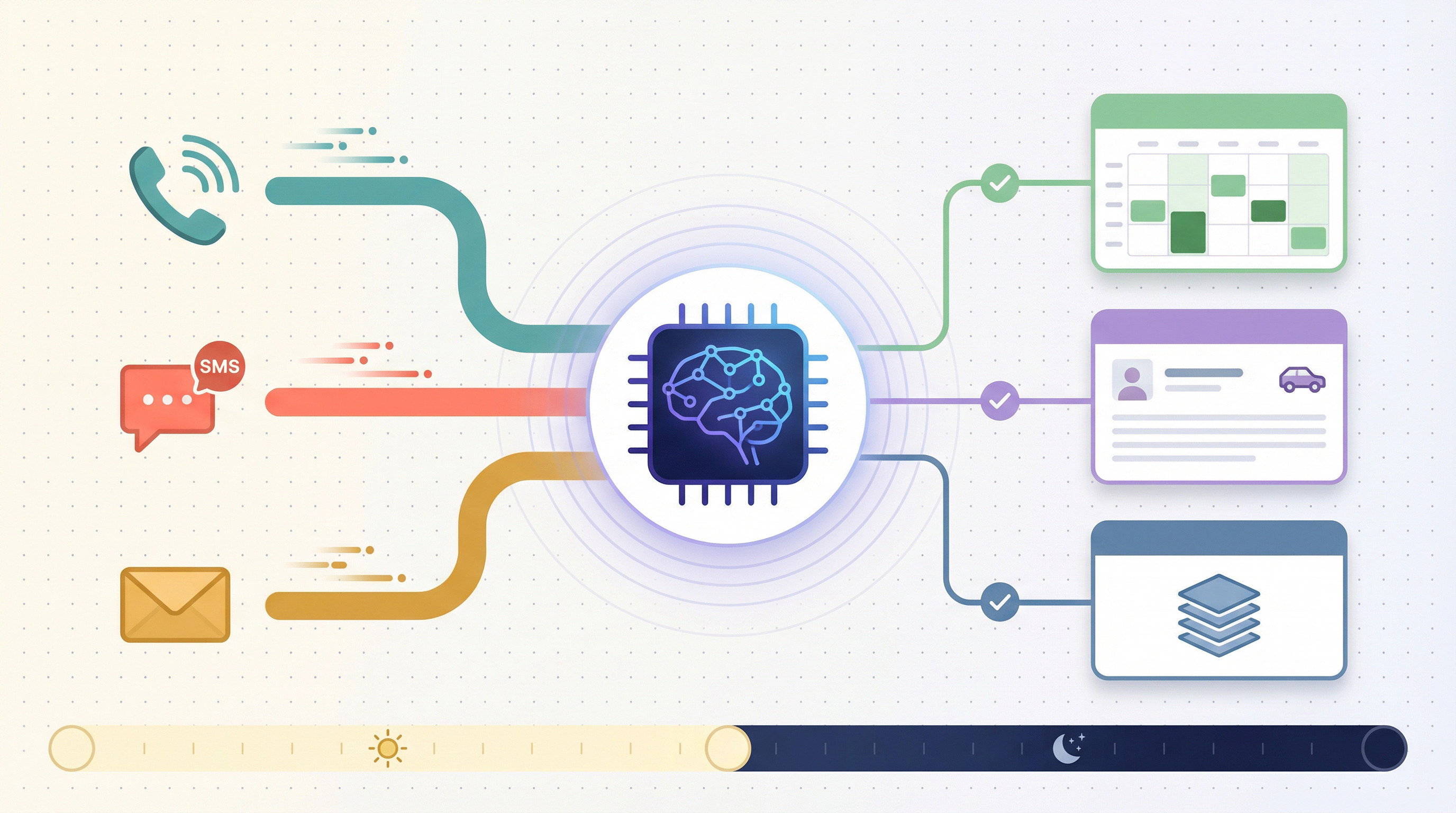
We integrate deeply with your existing systems. Flai connects to your DMS, CRM, scheduler, and phone system. When a customer calls at 8:30 PM wanting a 10,000-mile service for their RAV4, we check real availability in your scheduler, book the appointment, confirm the details, and write it back to your system. No message-taking, no callback needed.
We handle every channel. Phone calls via AI voice agents, SMS for confirmations and follow-ups, email for lead nurturing and reminders. All channels share the same intelligence, so a customer can start on one channel and finish on another without repeating themselves.
No hardware or training required. You route your number to Flai, and it’s live. We plug into what you already have.
Multilingual, concurrent, and always on. Flai handles multiple calls simultaneously, speaks any language, and never takes a break. Every store gets coverage that performs like the top 20% of dealers, overnight.
What Results Are Dealerships Actually Seeing?
Our case studies tell the story through the numbers that matter most:
| Dealership | Calls Handled | Appointments Booked | Profit Impact | Booking Rate |
|---|---|---|---|---|
| Freeman Lexus | ~1,100 | 376 | $100,000 | 88% of bookable |
| San Leandro CDJR | 1,563 | 304 | $83,000 | ~19% of all calls |
| Freeman Toyota | 1,053 | 358 | $94,000 | ~34% of all calls |
These results aren’t just marketing claims. Each case study is documented with real metrics and outcomes:
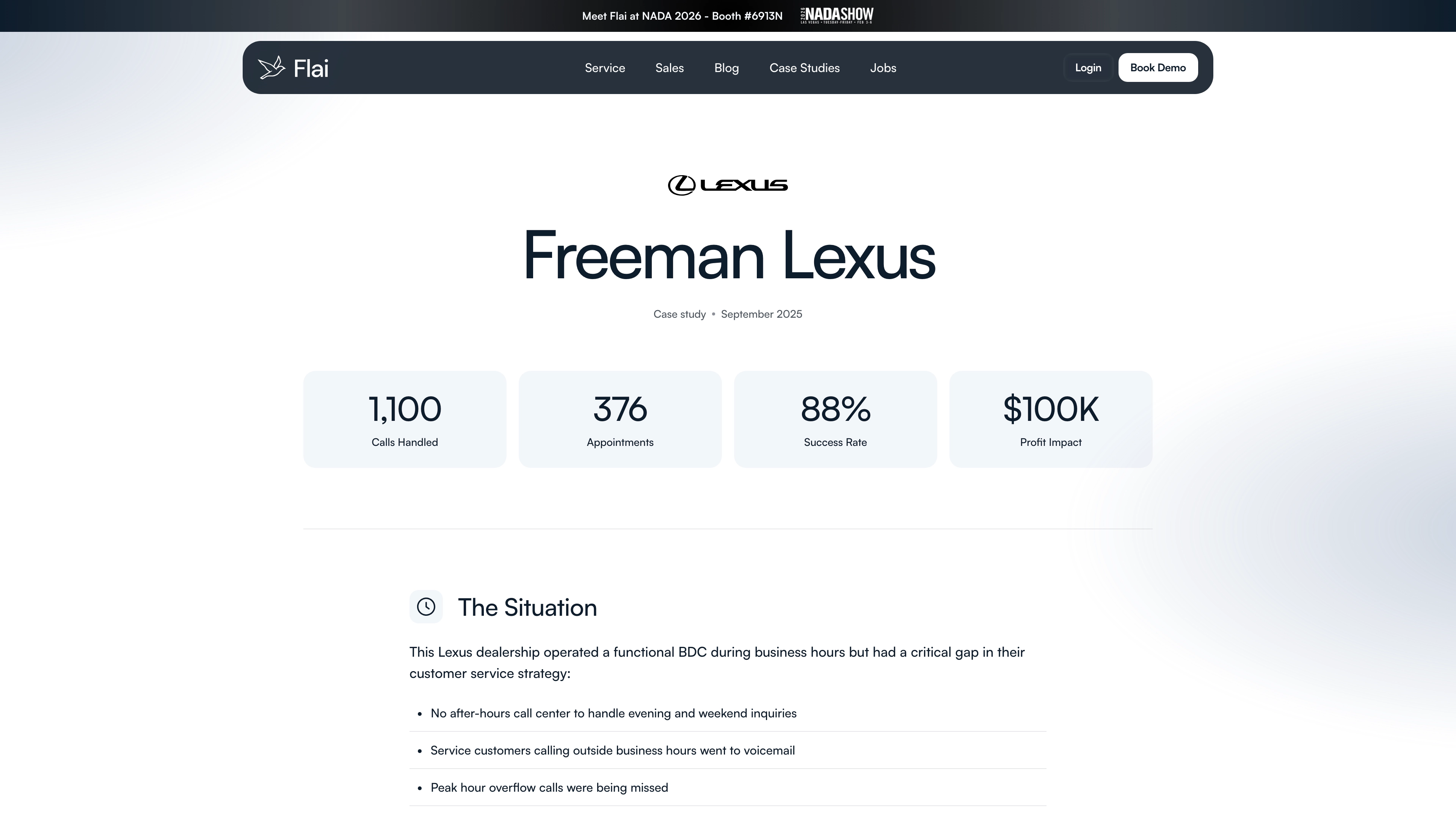


The CDJR store saw monthly service appointments jump from 205 to 448 in its first month with Flai. Zero missed calls, zero hold time. Across our case studies, profit per appointment clusters around $260 to $270, which aligns with the independent NADA and McKinsey data we covered earlier. That consistency between vendor results and industry benchmarks is what makes the ROI math credible, not just hopeful.
Our team comes from building voice AI at HappyRobot (YC S23) and working on data infrastructure at Uber and Netflix. We graduated from Y Combinator’s S25 batch and raised a $4.5 million seed round led by First Round Capital. We’re SOC 2 Type II compliant, and we’re live in dozens of dealerships handling tens of thousands of calls.
How to Evaluate Any AI BDC (Including Ours)
Whether you’re looking at Flai or any other option, here’s how to make a clean decision.
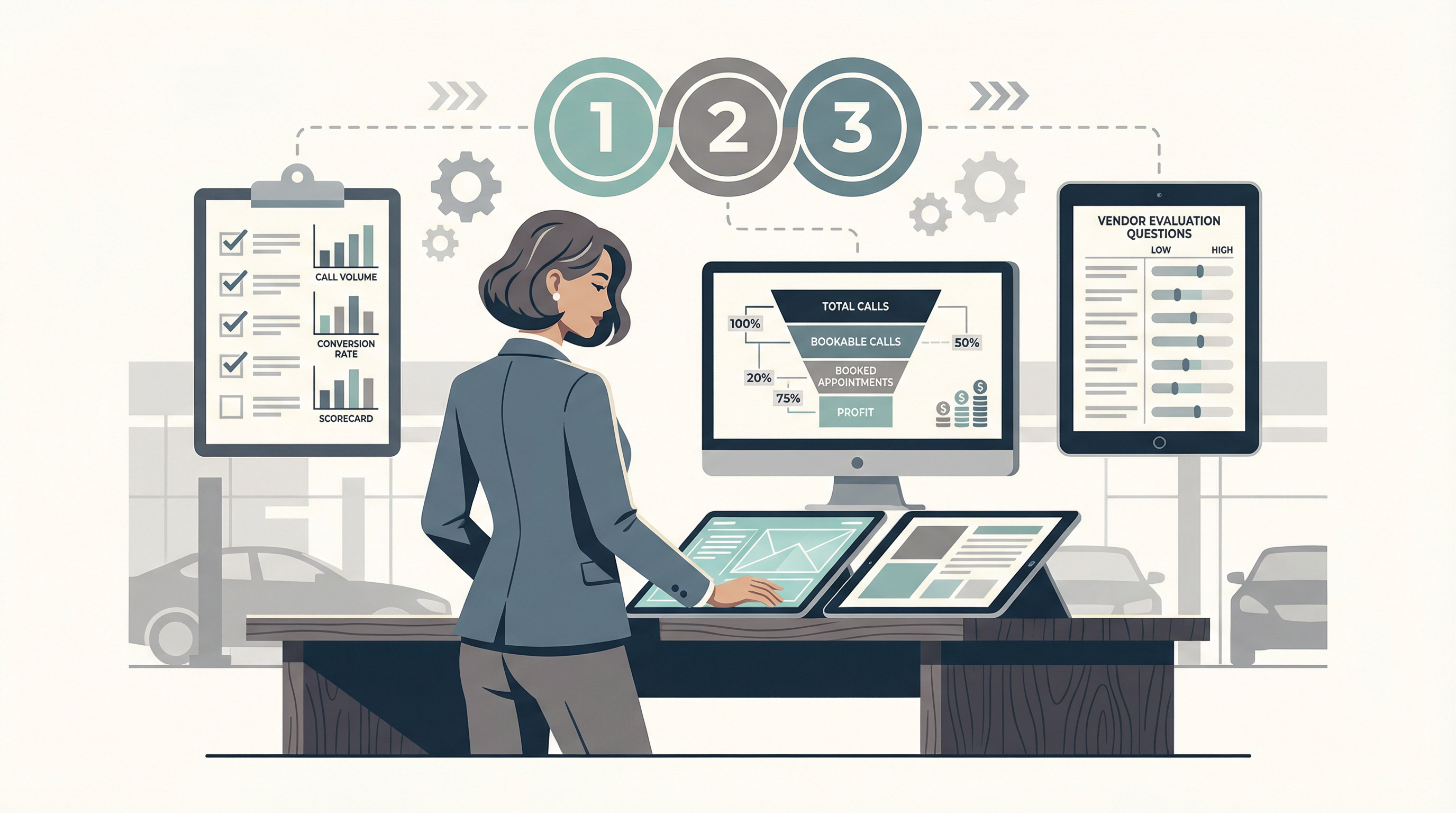
Step 1: Track Your Current Call Reality for 7 Days
Track these metrics for one week:
- Calls by hour of day
- Answer rate and hold time
- Abandon rate (hang-ups while on hold)
- Voicemail rate
- Bookable call rate
- Appointments actually set from calls
Car Wars data shows that holds and voicemail are the two biggest failure modes, so measure yours specifically.
Step 2: Start Where You’re Losing the Most Calls
Start where you’re losing the most:
- After-hours service scheduling
- Monday morning spike window (10 AM to noon is typically the worst)
- Overflow during lunch and end-of-day rushes
Step 3: Measure Real Outcomes for 30 Days
Don’t measure “vibes.” Measure:
- Incremental appointments booked
- Show rate for AI-booked appointments
- RO value and gross profit contribution
- Customer complaints and escalations
- Staff time freed up
Questions to Ask Any Vendor
- Can you book directly into my scheduler, or do you take messages?
- How do you handle peak concurrency (ten calls at once)?
- What is your real average speed to answer?
- What does escalation look like? Warm transfer with context, or blind handoff?
- How do you report outcomes? (Booked, transferred, callback, abandoned, failed)
- How do you handle compliance? (Recording consent, SMS opt-outs, outbound rules)
- What does onboarding look like for my DMS/CRM/scheduler stack?
- Can I talk to two live references in my brand and dealership size?
If a vendor can’t show you the full chain from total calls to bookable calls to booked appointments to conversion rate to profit logic, they’re selling you vibes, not a solution.
Frequently Asked Questions
Will AI Replace My BDC Team Entirely?
Not necessarily, and in most cases, that’s not the goal. Gartner research shows that most customer service teams maintain stable staffing even after adopting AI. The real shift is that your human team handles fewer repetitive scheduling calls and focuses on higher-value work like in-person customer interactions, complex questions, and closing deals. Flai works alongside your team, not instead of it.
What About Customers Who Don’t Want AI?
This comes up a lot, and it’s a fair concern. The practical answer: most customers care about getting their problem solved fast, not whether a human or AI is solving it. When Flai’s AI answers instantly, has a natural-sounding voice, and books the appointment on the spot, most callers don’t object. For those who do want a human, the system warm-transfers them with full context so they don’t have to repeat themselves.

How Fast Can AI BDC Be Deployed?
With Flai, deployment doesn’t require new hardware or staff training. You route your phone number to us, we integrate with your scheduler, DMS, and CRM, and the system goes live. Most dealerships are up and running within days, not weeks.
Is AI Reliable for Luxury Dealerships?
Our Freeman Lexus case study answers this directly. The dealership handled roughly 1,100 calls through Flai with zero missed calls and an 88% booking rate on bookable calls. Luxury customers expect immediate, premium service. An AI that picks up instantly and books without friction actually delivers a better experience than hold music and voicemail.
What Happens During a System Outage?
Any responsible AI BDC should have escalation protocols built in. With Flai, if the AI encounters a situation it can’t resolve (a highly complex technical question, an angry customer needing human empathy), it warm-transfers to your staff with a full summary of the conversation so far. We also provide SOC 2 Type II security compliance and comprehensive logging so you always know what happened on every call.
How Do I Calculate ROI for My Dealership?
Use the model in this article. Pull your total inbound calls, missed/abandoned rate, and bookable call percentage from your call tracking system. Multiply through to get incremental appointments, then multiply by your average gross profit per appointment ($210-$256 based on NADA data, or use your own). Compare that incremental profit to the monthly cost of the solution. Most dealerships find they break even within the first week or two of each month.
Can AI Handle Service, Sales, and Recalls All at Once?
Yes. A well-built AI BDC like Flai classifies calls by intent automatically. Service calls get routed to the scheduling flow. Sales inquiries get captured and followed up via SMS and email. Recall-related calls get matched to affected VINs and booked into the right service slots. The system handles each use case with specific workflows, not one generic script. And because it’s software, it can run all of these simultaneously across your entire call volume without the “I’m transferring you” shuffle that frustrates customers.
What About Call Recording and Compliance?
This is an important consideration with any call handling system, whether human or AI. With Flai, call recording consent is handled in accordance with applicable laws, outbound communications follow TCPA guidelines, and SMS messaging includes proper opt-out mechanisms. We maintain SOC 2 Type II compliance for security controls, as detailed in our privacy policy. Always verify that any vendor you’re evaluating can clearly explain their compliance framework and provide documentation.
The Bottom Line on AI vs Traditional BDC
The AI vs traditional BDC comparison isn’t really about technology preference. It’s about math.

A traditional in-house BDC delivering 24/7 coverage costs $225,000 to $272,000 per year for a single always-answered seat, before management, technology, and turnover. Outsourced BDC can cut that cost but usually trades resolution quality for price. And both options share the same fundamental limitation: human capacity is finite and lumpy, while customer demand is unpredictable and constant.
AI BDC changes the equation by eliminating the coverage gap, removing the capacity ceiling, and delivering consistent outcomes on every call. It won’t replace your team. It’ll make sure that every customer who tries to reach your dealership gets helped, whether they call at 10 AM on Monday or 9 PM on Sunday.
Every unconnected call has a dollar value. Every recovered appointment contributes a few hundred dollars in gross profit. And the gap between what you’re capturing today and what you could be capturing is almost always larger than you think.
Run the numbers with your own data. Pull your call logs, calculate your missed-call rate, estimate your bookable percentage, and plug it into the ROI model above. If the math works (and for most dealerships with meaningful call volume, it does), the next step is straightforward: pick a high-leakage segment, pilot for 30 days, and measure outcomes.
If you want to see how Flai handles this for stores like yours, book a demo and we’ll walk through it with your actual numbers.