Privacy Policy
Terms of Service
Security
Status
Blogs & Guides
AI answers every service call instantly, books appointments 24/7, and drives measurable profit. Real case studies with $80k-$100k monthly impact.
January 27, 2026
Your service department probably has the same goals it had five years ago: keep bays full, stop bleeding callers to voicemail, get more work approved without making the lane feel like a timeshare pitch, and protect the CSI scores that keep your OEM relationship healthy.
What’s changed in 2026 is that AI can actually do something about these problems. Not just chat. Not just generate reports. Actually listen to a customer, understand what they need, and book that oil change directly into your scheduler at 11pm on a Sunday.

This is the playbook for making that happen in your store.
Three structural forces are pushing service departments toward AI adoption faster than any other part of the dealership:
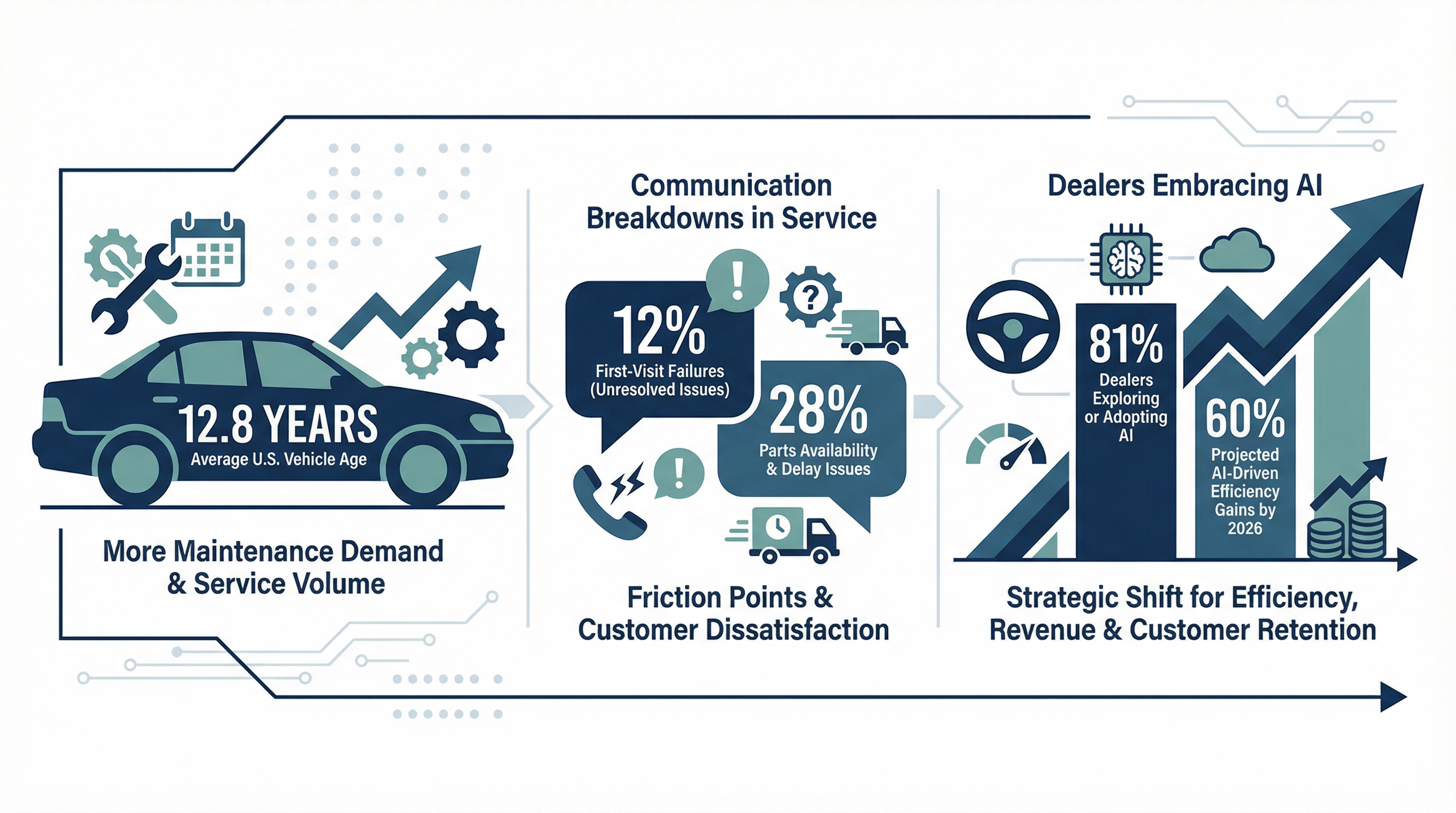
The U.S. vehicle fleet is getting older. S&P Global Mobility reported the average age of cars and light trucks in the U.S. hit a record 12.8 years in May 2025. Older fleet means more maintenance, more repairs, and more “my car is making a weird noise” calls flooding your phones.
Communication is the new battleground for customer satisfaction. JD Power’s 2025 U.S. Customer Service Index study found that four of the top 10 factors impacting satisfaction are communication-related. And the numbers aren’t pretty: 12% of repairs weren’t done correctly on the first visit, and 28% of owners said parts weren’t available.
Even when your techs nail the wrench work, the experience can still tank.
Dealers have moved past curiosity. Cox Automotive’s 2025 AI Readiness Study found 81% of dealers believe AI is “here to stay,” 63% say investing now is critical, and 60% are already testing AI tools.
The “let’s wait and see” crowd is running out of company.
Strip away the DMS jargon and your service department is three systems layered on top of each other:
| System | What It Does | Where It Breaks |
|---|---|---|
| Demand Capture | Calls, texts, emails, web chats, recall outreach | After-hours gaps, hold times, voicemail black holes |
| Capacity Allocation | Advisors, tech hours, bays, loaners, parts | Scheduling chaos, utilization gaps, wrong durations |
| Trust + Approvals | MPI, recommendations, estimates, authorizations | Customers don't trust the recommendation; work gets declined |
AI matters because it can improve all three. But it’s especially good at the two things humans struggle with most:
The old ceiling was “we staffed the phones and did our best.”
The new ceiling is every inbound interaction gets answered instantly, 24/7, and moves toward an outcome (booked appointment, resolved question, or routed correctly with context).
Pied Piper’s 2025 Service Telephone Effectiveness Study reported that AI agents it evaluated handled calls successfully 91% of the time and scheduled service appointments 86% of the time. Humans scheduled at 90%.
But there’s a catch. When AI tries to transfer to a human, 56% of those transfers failed.
The takeaway: Containment is getting good. Handoffs are still the danger zone.
What “good” looks like in 2026:
Real-world example: Freeman Lexus used an AI BDC platform to handle after-hours and overflow service calls. The case study from September 2025 reports approximately 1,100 calls handled, 426 “bookable calls,” 376 appointments booked (88% success rate), and an estimated $100,000 profit impact.
In most stores, scheduling is treated like calendar admin. Someone calls, you find an open slot, done.
In reality, it’s production planning.
Schedule wrong and you blow up technician flow, loaners, and wait times. Schedule slow and the customer books somewhere else. Schedule inconsistently and you get weird bay utilization gaps.
AI scheduling in 2026 is trending toward:
Most scheduling calls are structured. The variability feels high to humans because the phone environment is chaotic. Purpose-built AI voice platforms remove that chaos by running a consistent intake every single time.
Service departments burn insane amounts of time on calls that are basically:
JD Power’s 2025 U.S. Aftermarket Service Index study found 52% of full-service maintenance/repair customers prefer updates via text message versus 18% who prefer a phone call.
And it’s not just preference. Customers who receive updates via their preferred method (text) are significantly more satisfied. JD Power reports a +35 point satisfaction lift for full-service customers when their preferred communication method is used.
AI can run the “update loop” at scale. Status updates, approvals, pickup coordination. No advisor has to remember to call anyone back.
The simple shift: instead of customers pulling updates via calls, you push updates via SMS.
This is one of the most underpriced wins in service.
JD Power’s 2025 ASI study included a clean stat:
Among full-service maintenance/repair customers who receive an MPI with photo/video, 41% approve the recommended work. Without photo/video, only 17% do.
That’s a 2.4x improvement in approval rates just by showing evidence.
AI turns MPI from “here’s a long list you probably won’t read” into:
Customers don’t reject work because they hate maintenance. They reject because they don’t trust the recommendation. Evidence plus clarity collapses that trust gap.
Remember those JD Power stats? 12% of repairs not done correctly the first time. 28% of customers said parts weren’t available.
AI won’t magically summon parts from thin air. But it can reduce rework and delays by improving information flow:
This is the “unsexy” side of AI. Not talking, but coordinating.
Most dealers have dashboards. The problem is dashboards don’t run your day.
AI is pushing analytics toward:
Cox Automotive’s AI Readiness Study notes dealers are already using AI for operational tasks (not just marketing), but accuracy and trust remain the biggest concerns.
The next competitive edge isn’t “do you have AI?” It’s “do you trust your AI outputs enough to act on them?”
Dealerships already have too many tools. AI is forcing a hard question:
“Does this tool complete the workflow, or does it just create another inbox?”
In 2026, the winners are systems that:
For example, Flai’s December 2025 integration with Tekion positions this as workflow-level connectivity across sales, CRM, parts, and service. Not “another chatbot.” An actual connected system. Learn more on the Flai blog.
A common fear is: “Customers won’t want to talk to bots.”
Reality is more nuanced.
CDK’s “AI in Automotive: Insights and Innovations” report found 31% of respondents would prefer booking a service appointment with an AI assistant. Among Gen Z, that rises to 51%. Among millennials, 44%.
That doesn’t mean everyone loves AI. It means a big chunk of customers prefer:
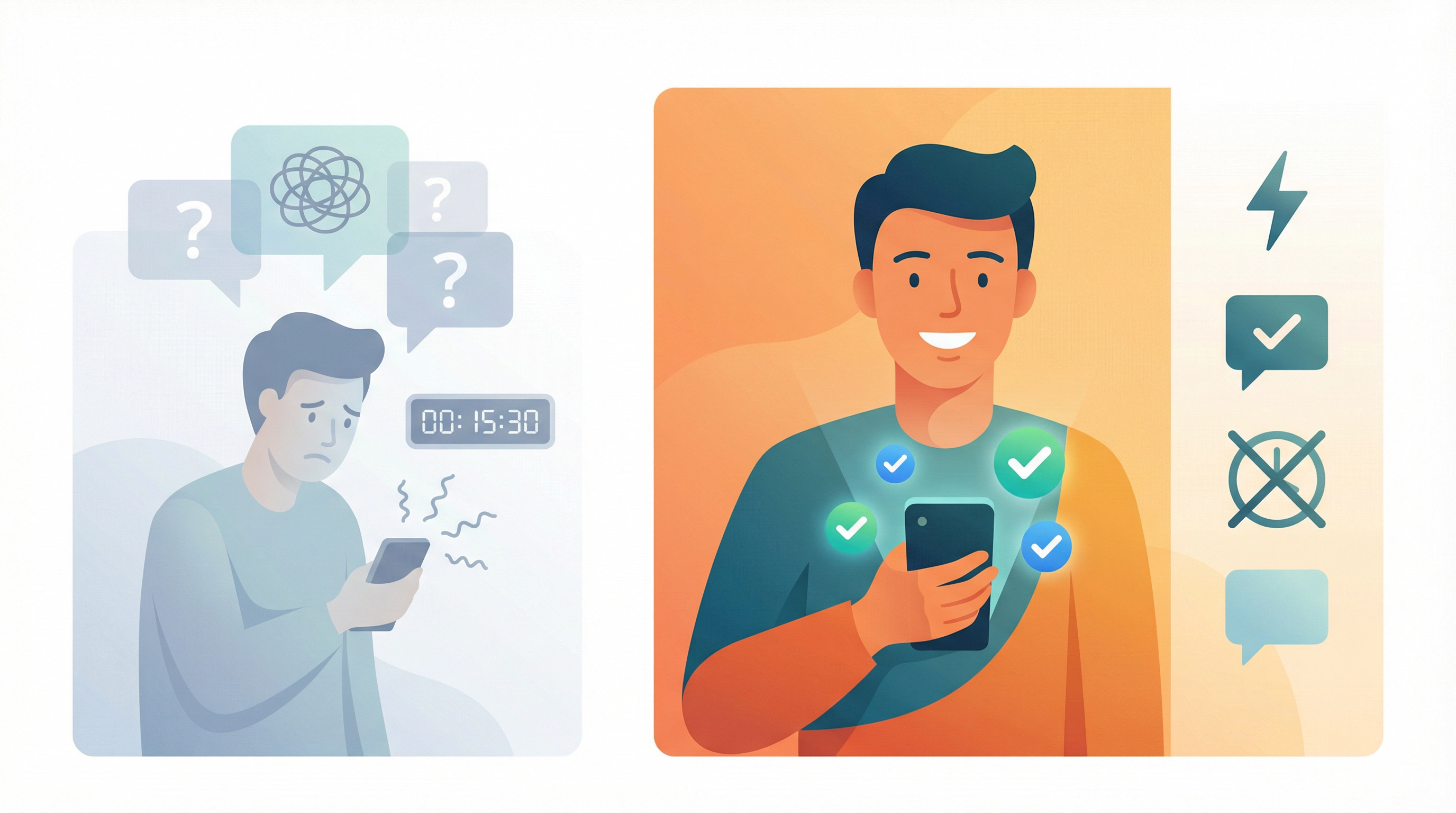
Once they get that experience, they won’t go back to the old way.
Think in layers, not vendors.
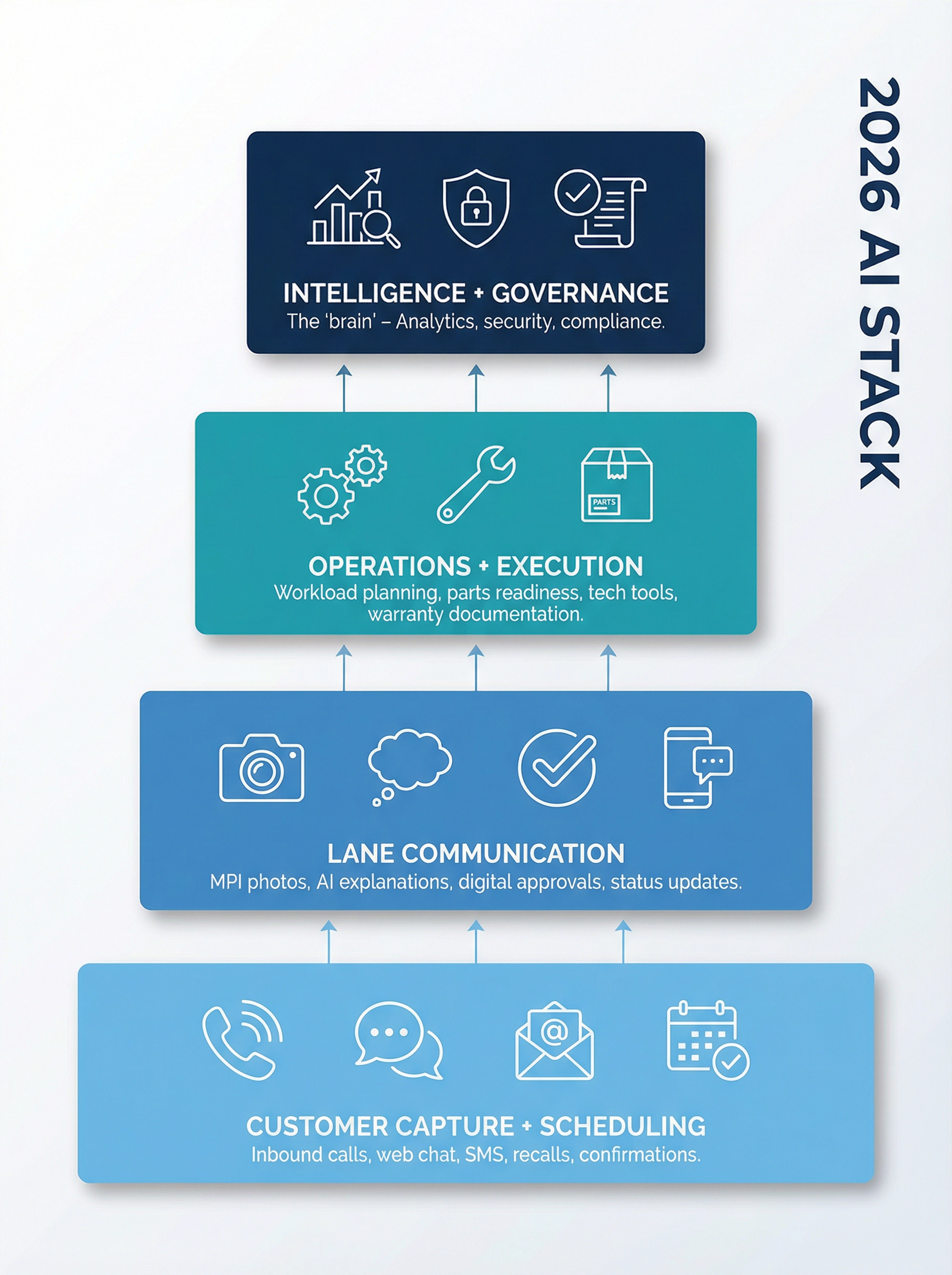
-> Inbound phone AI (receptionist/overflow/after-hours)
-> Web chat + SMS scheduling
-> Recall and reactivation outreach
-> Appointment confirmations + reschedules
-> MPI photo/video capture
-> AI-generated explanations + prioritization
-> Digital approvals + payment links
-> Proactive status updates
-> Workload planning + forecasting
-> Parts readiness workflows
-> Tech knowledge tools and diagnostic assistance
-> Warranty documentation support
-> Analytics tied to outcomes (booked, show, RO, hours sold)
-> QA + coaching
-> Audit trails, security controls, compliance
You can’t manage AI with vibes. Baseline these before you pilot:
| Metric | What It Measures | Target Direction |
|---|---|---|
| Answer Rate | % of inbound calls that connect to an agent | Higher |
| Abandon Rate | Hang-ups, voicemail drop-offs | Lower |
| Speed to Answer | Seconds before connection | Lower |
| After-Hours Capture | Appointments booked outside staffed hours | Higher |
(1) Booked appointment rate from “bookable calls”
(2) Schedule adherence (no-shows, reschedules)
(3) Days-to-appointment (lead time)
Reynolds and Reynolds’ Fixed Ops Golden Metrics report (August 2025) includes a useful lens: dealers using technician recommendation software outperform on service profitability.
In Class 2 stores (400+ customer-pay ROs/month), Reynolds reports customer-pay profit per RO of $482.64 with tech recommendation software versus $387.12 without. That’s an estimated $38,208 in additional monthly profit.
AI doesn’t automatically create those gains, but it’s the same underlying mechanism. Better presentation leads to more approvals. Better consistency leads to fewer missed opportunities.
This is the part most content skips. Here’s the practical plan.
Write your “AI job description” on one page:
What calls can AI fully handle? Routine maintenance scheduling, recall scheduling, hours/directions, basic status updates.
What calls must always escalate? Safety issues, angry escalations, legal/insurance edge cases, complex warranty disputes.
What’s the fallback? Callback ticket plus SMS confirmation, or warm transfer with context.
If you can’t write this down clearly, you’re not ready to deploy.
Best first pilots in 2026:
Why these first? High volume, low complexity, obvious win condition (booked appointment).
AI that can’t write into your scheduler/DMS/CRM is just a fancy answering service.
Minimum viable integration:
Bonus integration:
Remember Pied Piper’s data showing 56% of AI-to-human transfers failed? That’s why handoffs need to be designed properly:
Daily routine during the sprint:
Goal: make the top 10 failure modes disappear before you scale.
AI doesn’t replace your service advisors. It changes what they do.
Post-AI advisor work becomes:
Because the remaining calls are harder, you need better playbooks for your team.
We built Flai specifically for dealership service departments. Not as a chatbot bolted onto your existing systems, but as an AI communications platform that actually executes workflows.

The screenshot above shows the platform homepage, where the focus is immediately clear: this is an AI BDC built from the ground up for automotive. Unlike generic chatbots that require extensive customization, purpose-built solutions handle the workflows dealerships actually run—service scheduling, recall campaigns, sales follow-ups, and after-hours call capture.
What that means in practice:
The platform answers every inbound call immediately, 24/7. No hold music. No voicemail. The AI can book appointments directly into your scheduler, handle recall questions, provide status updates, and route complex calls with full context to the right person.
We integrate with your DMS, CRM, and scheduler so everything flows into your existing systems of record. No data lives in a separate silo.
Flai emerged from Y Combinator’s S25 batch and raised a $4.5M seed round led by First Round Capital. The team includes former engineers from HappyRobot (a leading voice AI startup) and a Netflix data scientist - people who’ve already built world-class voice AI products in other industries and are now bringing that expertise to automotive.
Real results from live deployments:
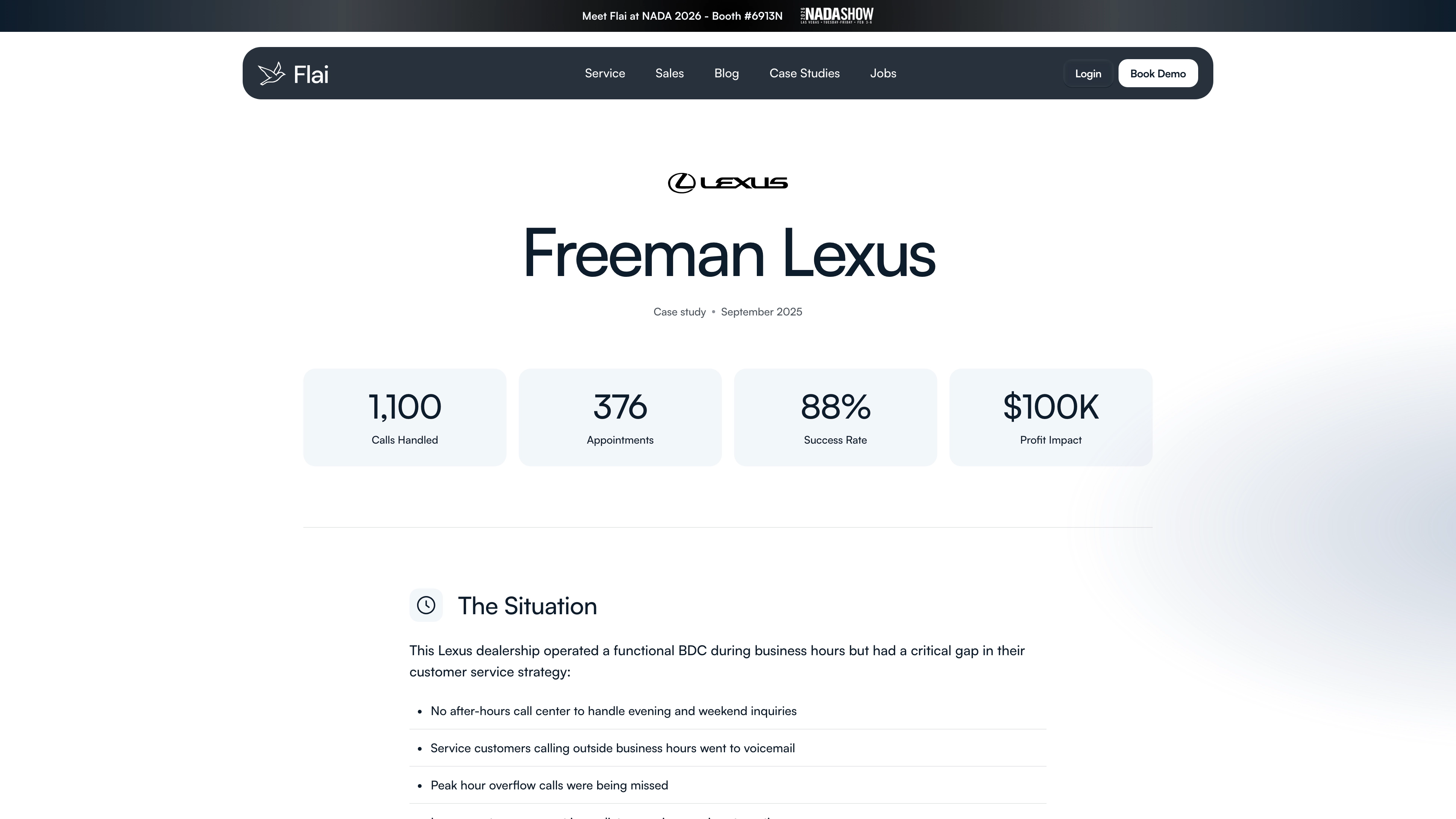
The Freeman Lexus case study page (shown above) details the full implementation: after-hours coverage, overflow handling during peak times, and the exact metrics that translated to six figures in monthly profit. The 88% booking rate on bookable calls isn’t a projection—it’s measured performance from actual dealership operations.
This isn’t theoretical. It’s already running in dealerships across the country.
The FCC issued a declaratory ruling (FCC 24-17, released February 8, 2024) clarifying that the TCPA’s restrictions on “artificial or prerecorded voice” apply to AI technologies that generate human voices. Calls using such tech generally require prior express consent absent an exemption.
Industry analysts have noted how AI-driven outreach increases TCPA risk, emphasizing consent, disclosures, opt-outs, and auditing.
Practical takeaway:
This depends on state law (one-party versus two-party consent). Your vendor should support configurable disclosure prompts, recording storage policies, and easy retrieval for disputes.
Your AI vendor will touch PII (names, phone numbers, vehicle info, sometimes payment links). Insist on:
Flai is SOC 2 Type II compliant and maintains clear data handling practices documented in our privacy policy.
Use these questions in demos. If a vendor can’t answer cleanly, that tells you everything.
AI in service pays back in two ways:
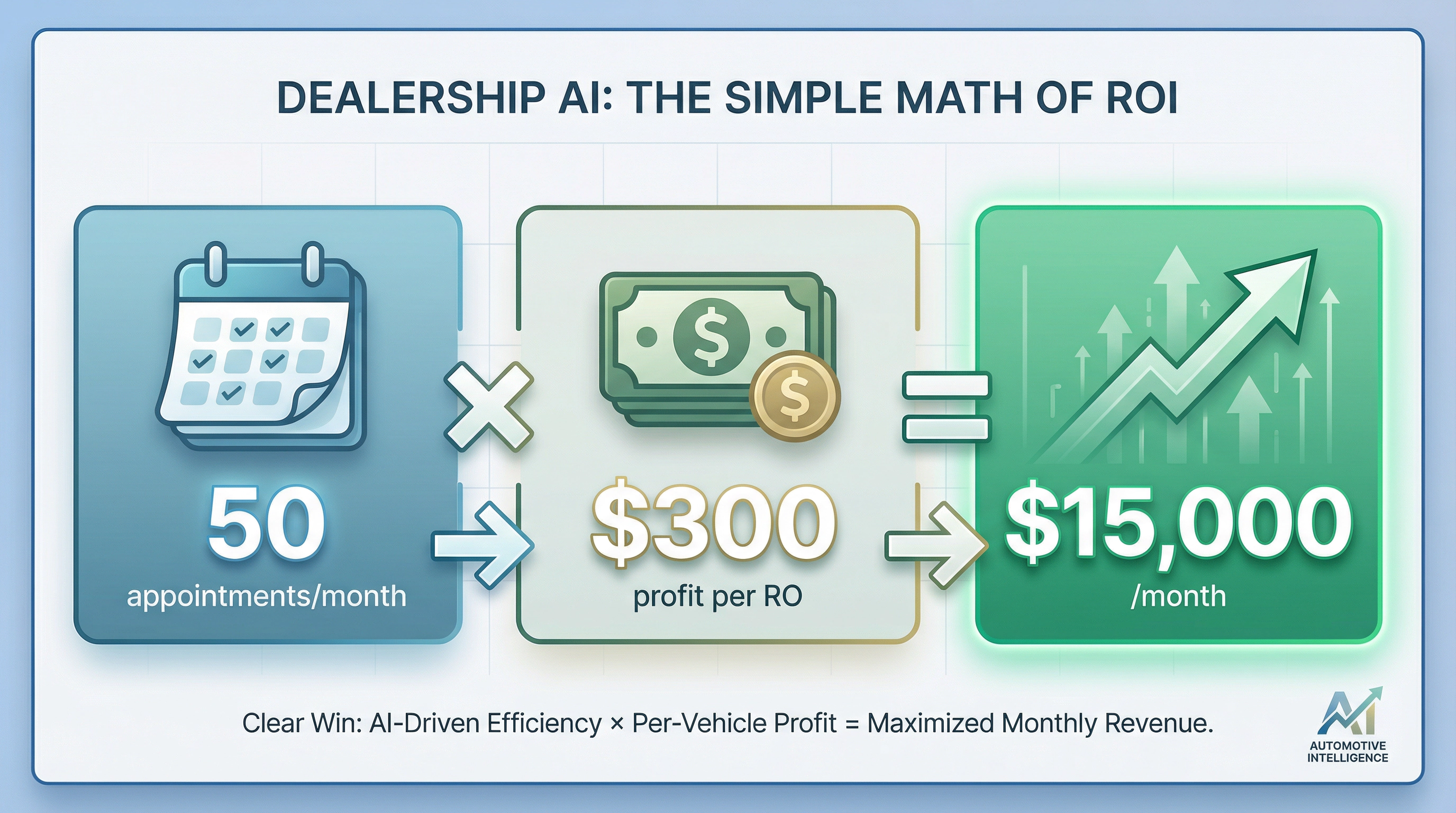
Here’s a conservative appointment-only model:
50 x $300 = $15,000/month incremental profit.
Compare that to most software costs and the math is obvious.
For a real deployment example, the Glendale Infiniti case shows 1,800+ calls/month, 160+ service appointments booked, zero missed calls, and 20% time saved for staff.
Most content in this space stops at: “AI answers calls.”
The real bar is higher:
If you hit that standard, your competitors will feel like they’re operating in 2016.
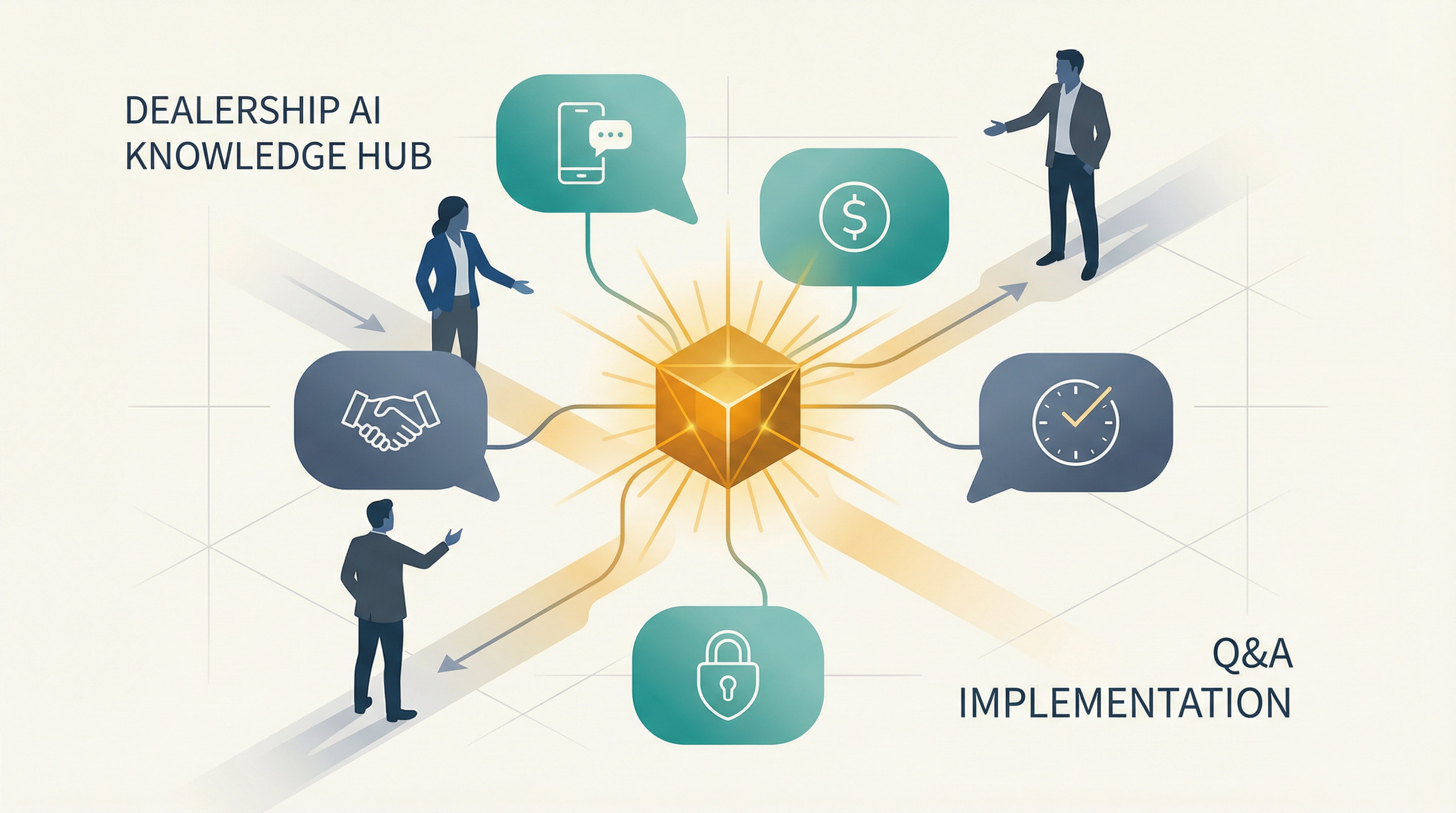
Based on Pied Piper’s 2025 study, AI agents handled calls successfully 91% of the time and scheduled service appointments 86% of the time. The key variable is how well the AI integrates with your actual scheduler and how well handoffs are designed when escalation is needed.
Pricing varies by vendor and is typically tied to call volume, minutes, or number of rooftops. Most dealers find AI pays for itself quickly. Case studies from leading platforms show profit impacts of $80,000 to $100,000+ per month at individual stores, with the AI handling thousands of calls monthly. See the Lexus case study for detailed results.
Many already prefer it. CDK’s research found 31% of consumers would prefer booking service with an AI assistant, rising to 51% among Gen Z. What customers really want is speed, no hold time, and not having to repeat themselves. AI delivers that.
With proper vendor integration, many dealers go live within days. Purpose-built automotive AI platforms require no hardware or extensive training. The key is integrating with your existing scheduler, DMS, and CRM so the AI can actually take action instead of just taking messages.
Good AI systems have designed escalation paths. The AI collects all relevant information, summarizes the situation, and either warm-transfers to an available person or schedules a callback with confirmation. The worst outcome is dumping callers to voicemail. That’s why handoff design is critical.
The FCC has clarified that AI-generated voices fall under TCPA restrictions on artificial or prerecorded voice calls. You generally need prior express consent for AI outbound calls (with some exemptions). Treat AI outbound the same way you’d treat automated outbound: get consent, document it, and provide clear opt-outs.
Baseline your current metrics before launching: answer rate, abandon rate, after-hours bookings, and appointments from inbound calls. Then track the same metrics post-deployment. Most dealers see the biggest impact in after-hours capture and reduced abandoned calls. Even 50 incremental appointments per month at $300 profit per RO generates $15,000/month.
At minimum: scheduler read/write (book, reschedule, cancel), caller identification, and notes into your CRM/DMS. Bonus integrations include repair order status, parts availability flags, and loaner/shuttle availability. If the AI can’t write into your core systems, it’s just a fancy answering machine.
Flai was built specifically for automotive, by a team with deep experience in voice AI and data science. The team includes former engineers from leading voice AI companies and Netflix. The platform emerged from Y Combinator’s S25 batch and raised a $4.5M seed round led by First Round Capital. Purpose-built solutions use voice stacks designed from the ground up rather than stitching together off-the-shelf components, which means faster response times and more natural conversations. Deep integrations with scheduler, DMS, and CRM systems ensure appointments get booked, not just requested.
Require access controls, encryption, clear retention policies, audit logs, and security attestations like SOC 2 reports. Your AI vendor handles sensitive customer data (names, phone numbers, vehicle info), so security isn’t optional. Flai maintains SOC 2 Type II compliance and documents data handling practices in our privacy policy.

If you want to see how AI service department automation works in practice:
The service department has been waiting for this technology. In 2026, it’s finally ready.
As seen in